06 吉美博物馆之“镇馆之宝”
作者:苏菲·马卡里乌Sophie Makariou
2019-12-08·阅读时长25分钟
Dear friends of Sanlian zhongdu,
亲爱的三联中读的朋友们,
I’m Sophie Makariou and the head of the Guimet Museum, which is the national museum of Asian art in Paris. The museum was established in 1889, by French industrialist and philanthropist, and his name was Emile Guimet. And he was most famous in France for his knowledge about Asia, especially about religions in Asia. He had a great passion for Buddhism.
我是苏菲·马卡里乌,是吉美博物馆的馆长,这是一座位于巴黎的专注于亚洲艺术收藏的国家博物馆。博物馆成立于1889年,是由法国一位名叫爱米尔·吉美的实业家和慈善家创办的。他因其对亚洲的了解而闻名法国,尤其是对亚洲宗教,他对佛教有极大的热情。
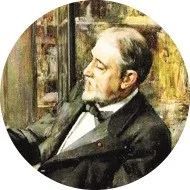
▲吉美博物馆创始人爱米尔·吉美
So in 1876-77, he paid a long travel to Asia, beginning by Japan then he went to China to Sri Lanka, to India, and that of course back to Europe, and when he arrived in Japan, he interviewed a lot of Buddhism, Buddhism was in a very bad situation. It was in a very bad situation. He arranged in Japan,and there was a threat against Buddhism. So he was able to interview a lot of monks, he buy a lot of books, sculptures since which were throwing away from the temples and destroyed, and paintings. And when he went back to France, he had the idea first of showing his collections. It was in Paris in the universal exhibition in 1878.
在1876年-1877年,他去亚洲旅行了很长一段时间。他先从日本开始,接着去中国、斯里兰卡、印度,然后再回到欧洲。他在日本的时候,访问了很多佛教点,当时佛教正处于非常糟糕的境地。他在日本调解,对佛教产生了威胁。所以他拜访了很多僧侣,他买了许多书,雕塑,绘画,因为这些都被从寺庙里扔出、或者损坏了。当他回到法国时,他第一次有了展示其收藏品的想法。于是在1878年,在巴黎举办了一次全球性的展览。
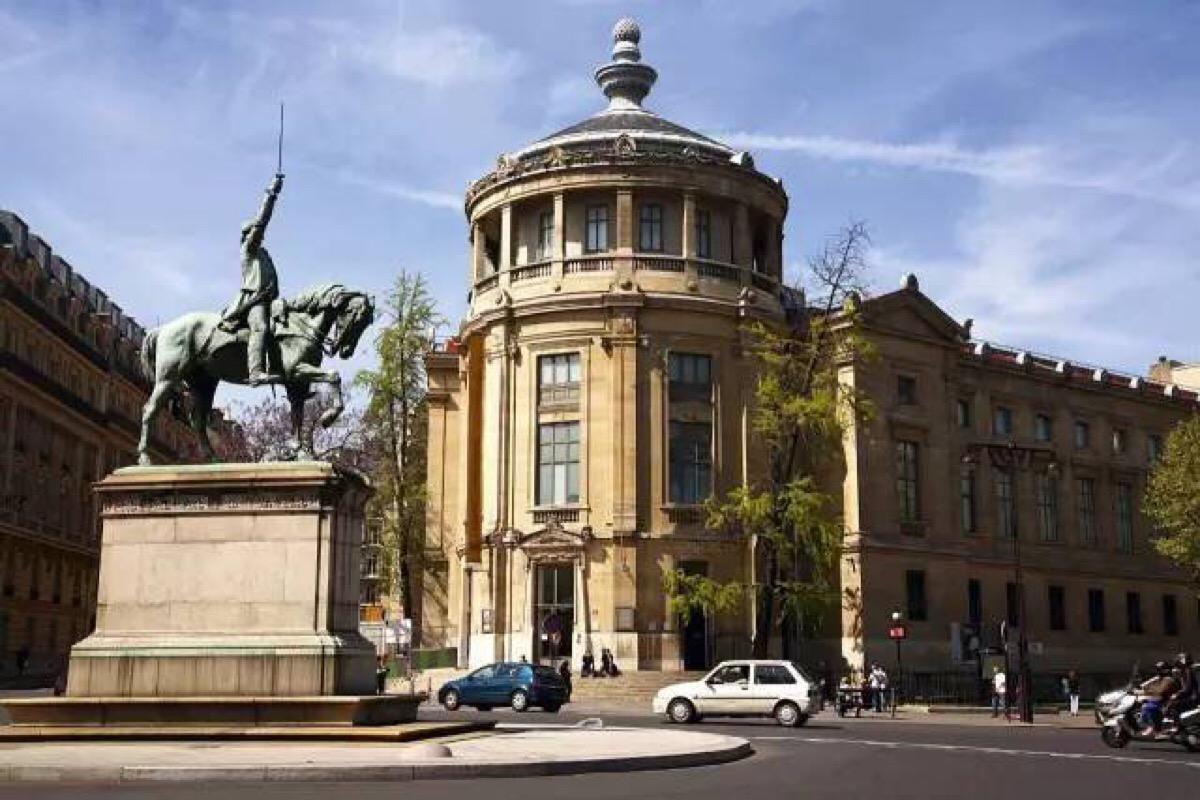
▲吉美博物馆外景
And then later he established a museum on the Chaillot hill in Paris. How is the museum? The museum I would say it’s a classical piece of architecture, more or less like a classical temple.
紧接着,他在巴黎的Chaillot山上创建了一座博物馆。这是怎样一座博物馆?我不得不说,这是一座非常古典的建筑,有点类似古典寺庙。
It’s a kind of triangle, and at the top of the triangle, there is à Rotterdam, and in the Rotterdam there is something really important which is a library. Emile Guimet had the feeling that books and knowledge were the most important things and he thought that the library should be the core of the museum. So he gave all his collections to the state in 1889, and the building, he paid himself for the building, and the city of Paris gave the land. So he stayed as the director of the museum until he died in 1918.
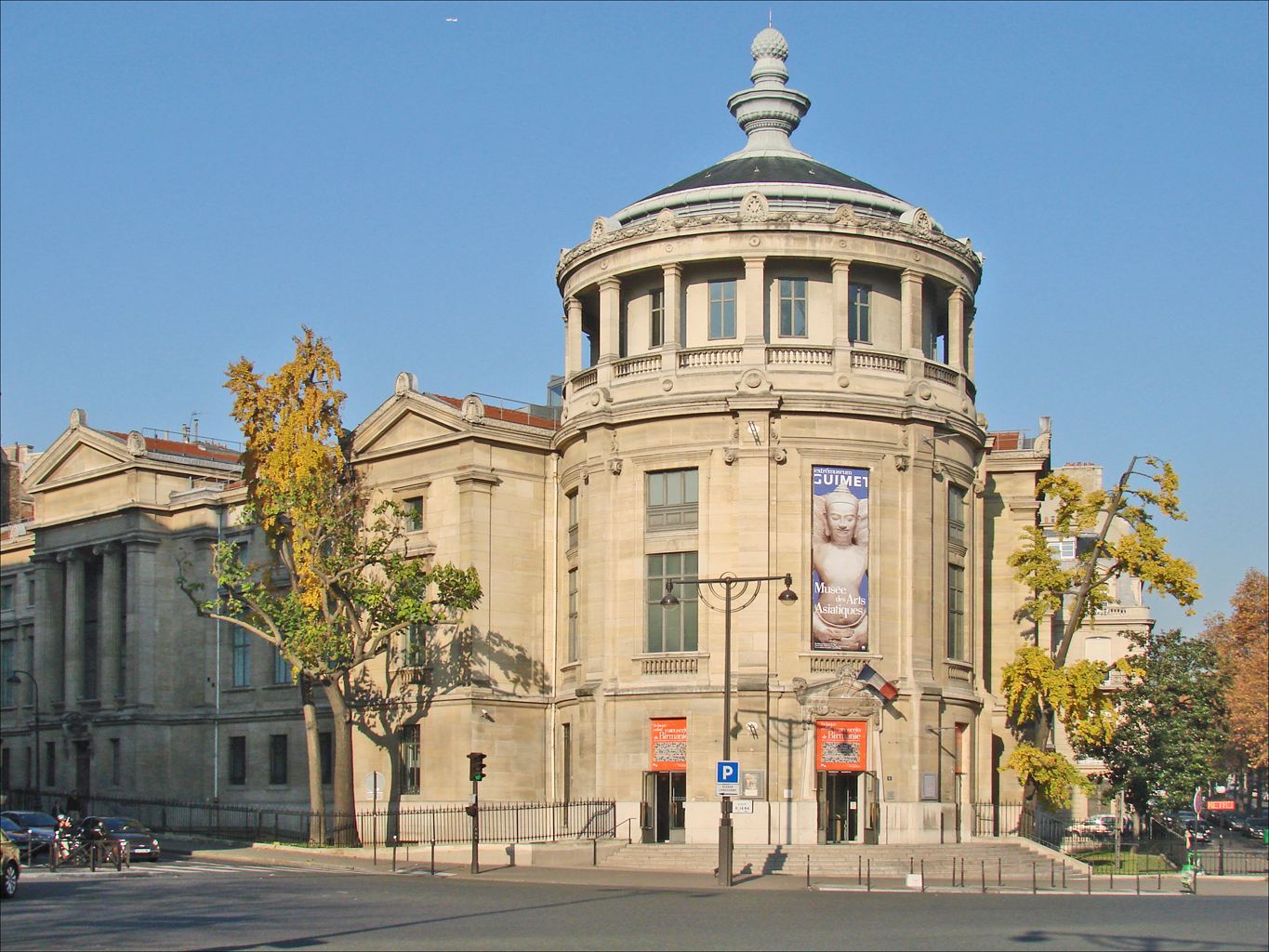
▲吉美博物馆外景
它是三角形的,在三角形的顶部,有一个罗特堤,在这座罗特堤上,有一个非常重要的图书馆。爱米尔·吉美认为书籍和知识是最重要的东西,他认为图书馆应该是博物馆的核心。在1889年,他把所有的收藏都捐赠给了政府,政府拿出一块地,他出资建造了这座博物馆。他一直担任博物馆馆长,直到1918年去世。
And then at the beginning it was a museum which was dedicate to the comparison between religions with a huge part dealing with Asia. And more and more, the museum was turned into a museum only dedicated to Asian art. So in 1827, it was really established as dealing only with Asian art. And very important thing is the constitution of the collections of course. the collection when the Emile Guimet was a director was around suite Antwerp’s and object, which was not a huge collection, but at this moment it was important. And now, more than 60000 works of art, collection of out of million of photography, which makes it the biggest collection of Asian photographys in France, and one of the biggest in Europe.
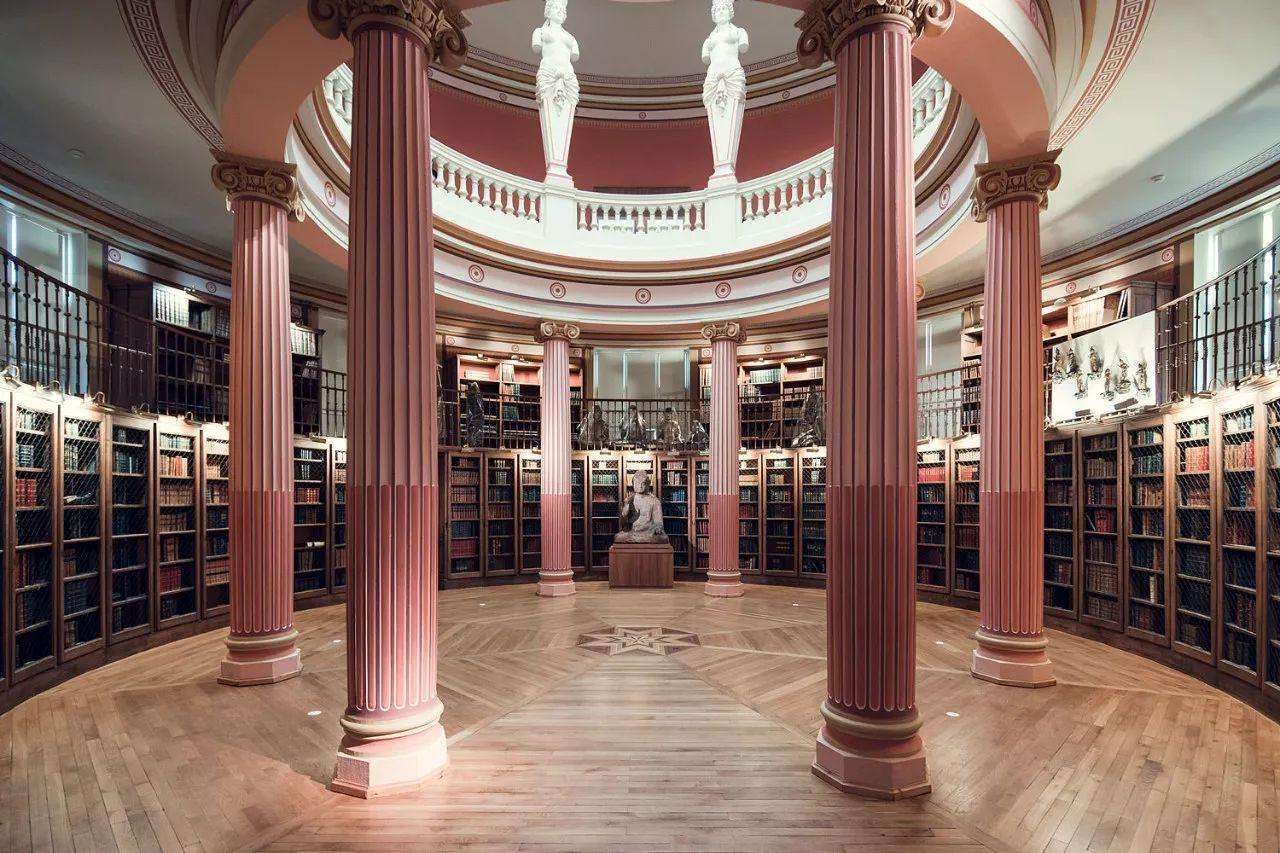
▲吉美博物馆里的图书馆
从一开始,博物馆致力于不同宗教之间的比较,其中很大一部分涉及亚洲。慢慢地,随着他对于亚洲艺术的研究,这座博物馆也慢慢转向于此。于是在1827年,它的建立真正只为收藏亚洲艺术。当然最重要的就是收藏品的构成,在爱米尔·吉美担任馆长时,当时拥有安特卫普市的藏品,并不是庞大的收藏,但对今天来说非常重要。现在,我们拥有了超过60000件作品,上百万件的摄影作品,这使得它成为法国最大的亚洲影像收藏地,也是欧洲最大的摄影收藏地之一。
That’s very important because of course on that change dramatically, I would say the aim of the museum. first, a big part of the excavations made in Asia or all the work which was done by the French as a school for farthest studies which was established in Çambodia.at the beginning of the 20th century, bought our objects to Paris. And what is our important is the collection is really link to study, since a very at beginning the museum was thought as I would say as “a scholar museum”.
这非常重要,当然这个变化非常重大,我指的是博物馆的宗旨。一开始,很大一部分的文物发掘都是从亚洲来的,并且当时法国人在柬埔寨建立了一个学校作为远方的研究中心。在20世纪初,这些作品被带回来了巴黎。对于我们来说重要的是,这些收藏都与研究相关,那是因为在一开始的时候,博物馆被认为是一座“学者博物馆”。
And now their important thing is that excavation, study collection, and pieces coming from Japan by Mr Guimet, was links to also with pieces coming from the Louvre where was in the all time in Asian collection. And especially a very important collection of Chinese porcelain established by un ex Grandidier, and given to French in 1894.
现在,他们的重点是发掘、研究收藏品,那些吉美先生从日本带回来的文物,以及从卢浮宫里来的亚洲各个时期的文物收藏。还有非常重要的收藏是来自于一位法国收藏家的中国瓷器,当时是在1894年给了法国。
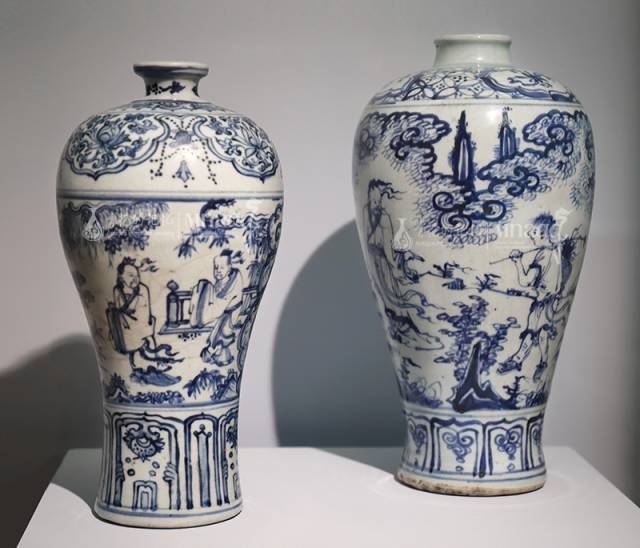
▲吉美博物馆收藏的中国瓷器
so later by later, all those Asian collections belonging to the state we are put it together, like a boxes coming from the French royal collection for example, some Chinese pieces coming also from the French royal collection. collection of Japanese prints,painting,Tibetan Himalayan art,India art,and so on. And all that created also the willingness of giving objects. All the French collectors gave the collection to the museum.
所以慢慢到最后,政府所有的亚洲艺术收藏都被我们聚集到这里,就像是盒子一样,来自于法国皇家收藏,有些中国的文物也是来自于法国皇家收藏。包括日本的版画、油画,西藏喜马拉雅艺术,印度艺术等等。这激发了大家捐赠收藏品的意愿,当时几乎所有的法国收藏家都把收藏品捐赠给了了博物馆。
What is the collection now? It’s a very multiplicate collection, dealing with a lot of countries form India to Japan, form China to Southeast Asia. We have Bamiyan collection. We have a huge Cambodia collection of course, of Khmer arts, it’s the second largest collection of Khmer arts. I would say of Cambodia, place a huge documentation about Cambodia, the oldest photography of Angkor temples, for example, a lots of drawings of temples which we were made when the temples were discovered.
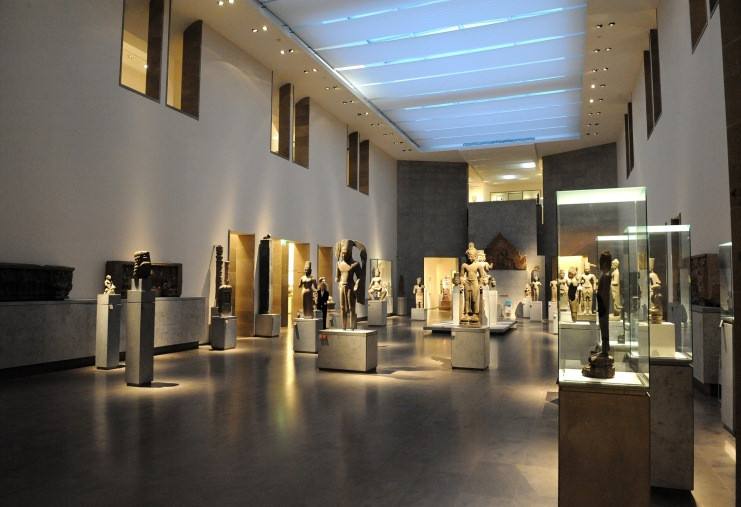
▲吉美博物馆展厅
那么目前的收藏是什么情况?是非常多样化的收藏,涉及很多国家,从印度到日本,从中国到东南亚。我们拥有巴米扬的收藏品,我们也有庞大的来自柬埔寨的收藏,高棉艺术,是全世界第二大高棉艺术收藏地。我还要提到关于柬埔寨的巨大的文献资料,比如最古老吴哥寺庙的摄影作品,大量的有关于吴哥寺庙的绘画,是当时在寺庙在被发现时创作的。
So it brings a unique flavor to this collection, and we are still buying. And we are also much interested not only ancient art, but also in contemporary creation in Asia. I would say in Japanese contemporary ceramics,contemporary Chinese L’art work,for example textiles. We have some contemporary Chinese ink paintings. So we are really trying you know to link the old collection, the past, the present, and the future. And I think it add a lot of the meaning to the collection. And also, it brings new people to the museum. Because we can’t say that the art of Asia is now finished, of course is a very vivid continent where a lot of things are going on. So we want also to show all that in the museum. I would say bringing all those new creation, Korean, Chinese, Vietnam, Japanese to the museum, linking cinema for example, music, theater to what is on display in the museum.
所以,这带给了这批收藏特别的风情。我们现在依然在收购艺术品,不仅对古代艺术感兴趣,而且对亚洲的当代创作也很感兴趣。比如我要提到日本当代陶瓷,中国当代艺术作品,例如纺织品,我们也有一些当代中国水墨画。所以,我们在尝试把古代的收藏与过去、现代、未来联系在一起。我认为这给这批收藏增添了很多意义。当然,这也吸引了一批新的观众来到博物馆。因为我们不能说亚洲艺术现在完结了,当然这是一块充满生机的大陆,在这里很多事情仍在持续发生。所以我们希望能把这些都在博物馆里做展示,把来自韩国、中国、越南、日本的最新的创作也带进博物馆,用电影、音乐、戏剧的形式与博物馆里展示的文物连结互动起来。
And It is a museum which is now as a number of visitor which approximate half of a million in a year. With of course a lot of people coming from Paris, from France, but also coming from Europe and from Asia. Because I think it’s unique place, not only to make a travel into Chinese art for example, but to go from Chinese art to Korea, to Japanese art, to Cambodia art. So in a word, visiting in the museum, you can make a travel into Asia.
现在,这座博物馆每年吸引了近50万的参观者。当然这里面很多人来自巴黎,来自法国,当然也有来自欧洲和亚洲的。我认为这是一个独特地方,不仅仅是来参观中国艺术品,还包括了韩国、日本、柬埔寨艺术。总而言之,参观这座博物馆的过程,像是一次亚洲之旅。
三件镇馆之宝介绍
镇馆之宝01:《阇耶跋摩七世》国王雕像
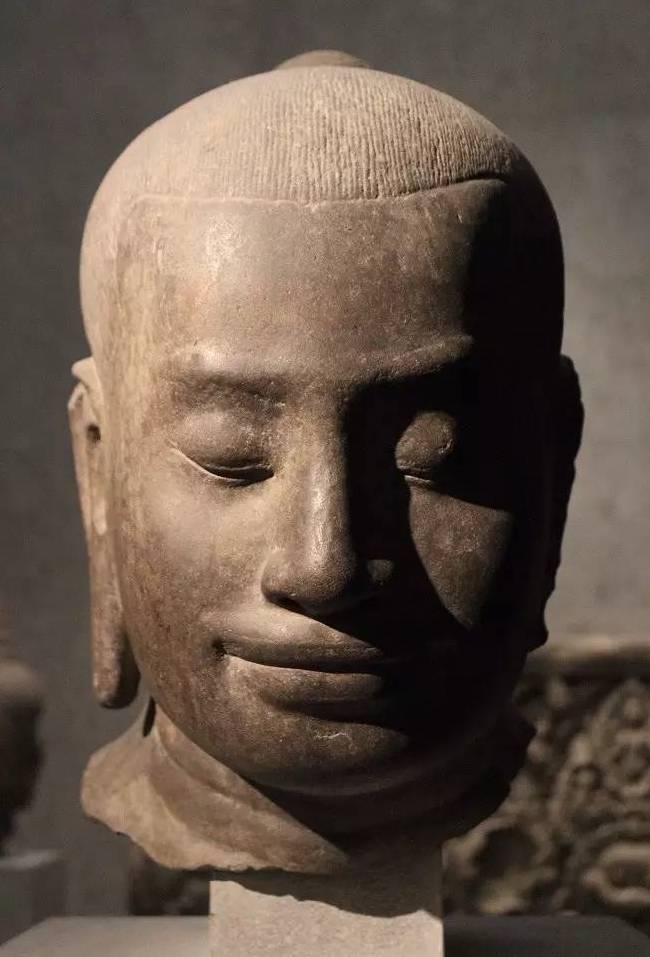
▲《阇耶跋摩七世》,吴哥窟,雕像,13世纪初,42x25x31cm,现收藏于法国吉美博物馆
I would say one important piece of course would be a piece of Khmer art. we are very lucky to have a beautiful sculpture which is the portrait of a king Jaya varman VII, a king of the 12 century,ruled from his capital which was Angkor. And he was one introduced really Buddhism into Cambodia. It’s a beautiful sculpture, he has closed his eyes and he is meditating. It’s a very great sculpture I think.
我首先要提一件重要的作品是高棉艺术。我们非常幸运能拥有这件非常精美的雕塑作品,是12世纪的执政于首都吴哥阇耶跋摩七世国王的雕像。他真正把佛教艺术带进了柬埔寨。这是一件唯美的雕塑,他闭着眼睛在沉思。我觉得这是非常伟大的作品。
镇馆之宝02:《千朵花》花瓶/ Mille Fleurs
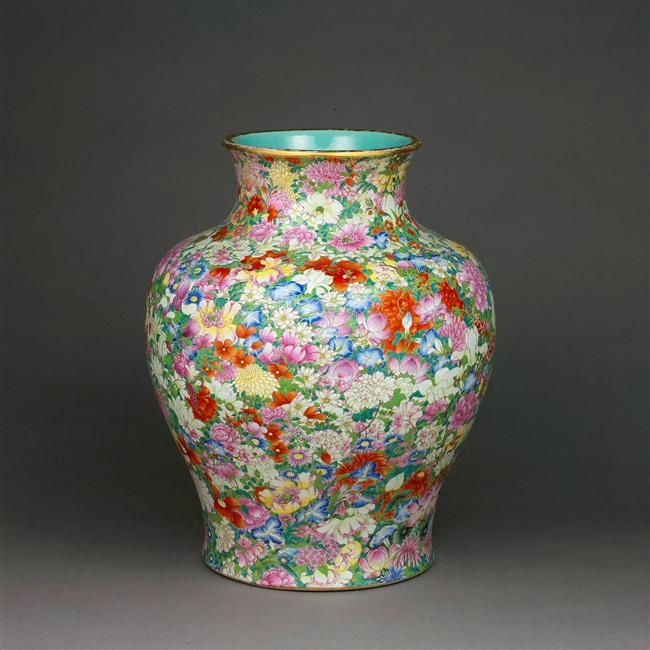
▲《千朵花》花瓶/ Mille Fleurs,清代,瓷器,乾隆时期(1736-1795),高48cm,现收藏于法国吉美博物馆
And of course I would say that we have very fantastic collections of Chinese ceramic. And there is a pair of vase I love especially which belong to Mr Pierpont Morgan,a great American collector, then which was bought by a Mrs Gravene, a great French collector and culture designer. And she gave a pair of beautiful vases which are covered with flowers, we call it in French mille fleurs. They were made under the reign of emperor Qianlong. and they have of course emperor marked the vase.so the indeed is the course, and there is incredible medal of flowers all around ,which is just amazing. I think that are two great works of art.
当然,我们有非常棒的中国陶瓷收藏品。我特别喜欢其中的一对,最早是属于美国的一位伟大收藏家皮尔庞特·摩根,之后被一位伟大的法国收藏家、格拉芙设计师收购。她把这对非常漂亮的,上面绘制了很多花朵的花瓶拿出来,我们在法语里叫做千花,它们创作于乾隆皇帝统治年间,当然它们也带有官印。所以确实是这个过程,其瓶身被精美的鲜花图案包围。令人叹为观止。我认为那是两件非常伟大的艺术品。
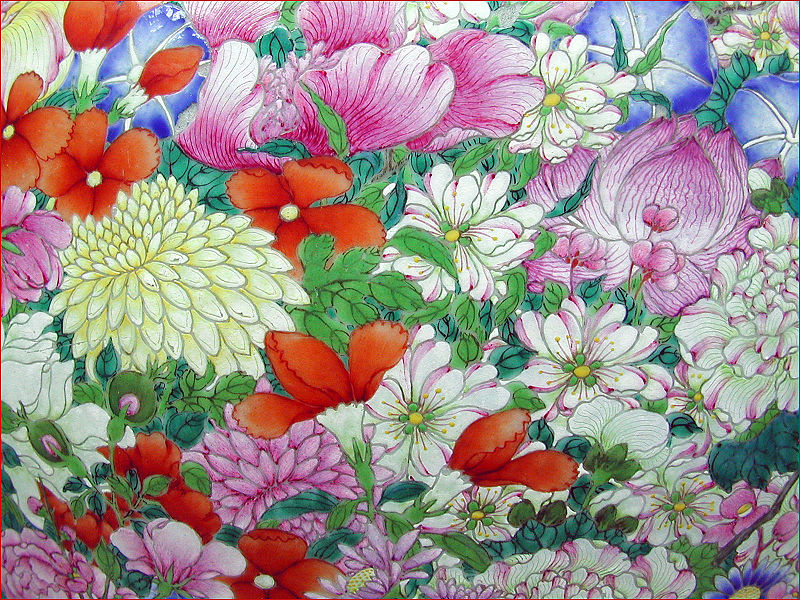
▲《千朵花》花瓶/ Mille Fleurs图爱细节
镇馆之宝03:《千手观音》/Avalokiteshvara à mille bras
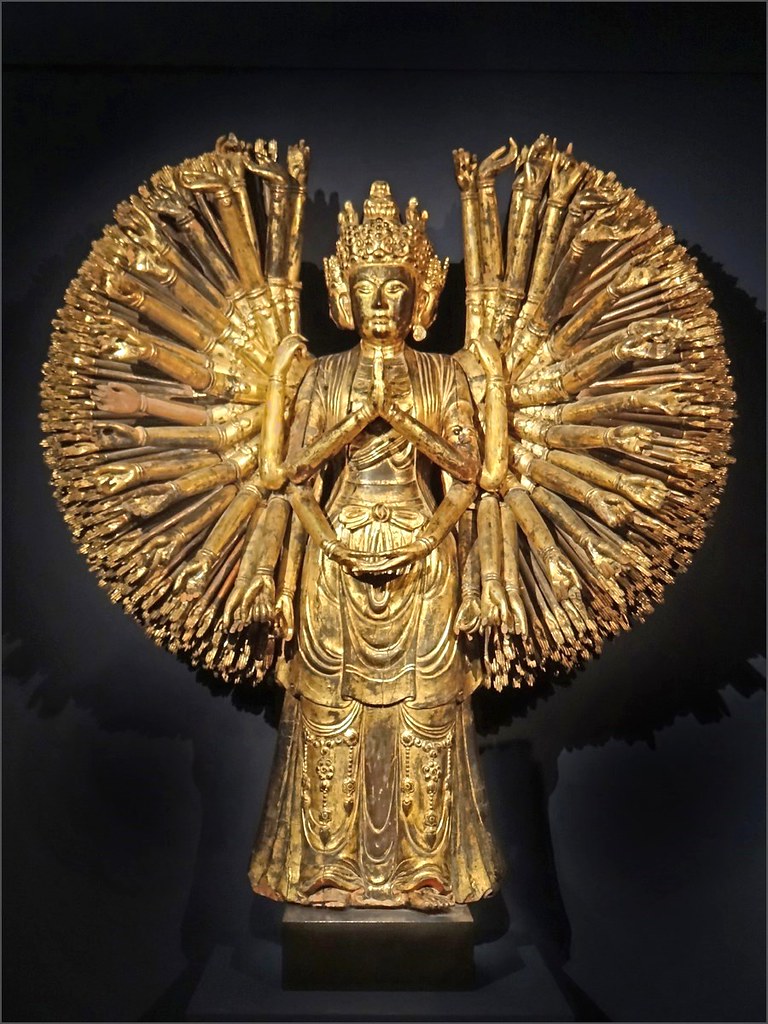
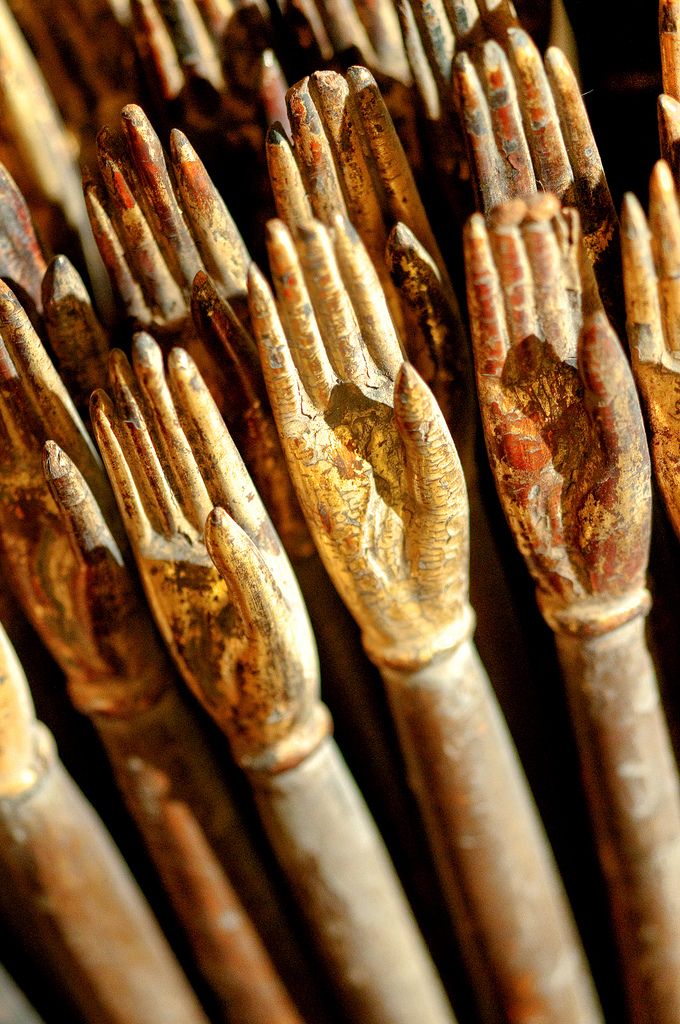
▲《千手观音》/Avalokiteshvara à mille bras,越南,雕塑,镀金木材,18-19世纪,现收藏于法国吉美博物馆
and my third great piece would be a Vietnamese piece, in fact, Vietnamese not always looked art inaffecté.. we have a wonderful, you would see guangyin in Çhinese, which is coming in Vietnamese. she never looked par art mais about cette vase made of lacked wood, and it has really one thousand arms we count them.and each of the arms have eyes.so she has one thousand eyes.so she is toute élégante, and it is a very very amazing piece.
我的第三件镇馆之宝是一件来自越南的文物。实际上,越南的东西不是总是看起来很做作。我们拥有一件非常精美的收藏——观音,在中国叫这个名字,在越南语中则有所不同。这件作品从艺术角度看起来,创作在非常珍贵的木头上。我们数过她真的有10000支手臂,每个手掌心都有一只眼睛,所以她有1000双眼睛。所以她仍旧很优雅,这是一件非常令人惊叹的作品。
在博物馆里最感动的一件事?
Well, a lot of great moments in the museum, but recently maybe is not the most striking thing, but what was very impressive. We have made exchanges with Cambodia, because you know the more we studied the pieces the more we discovered the history of the pieces. So we realize that in the best century two pieces, you know a lot of temples in Angkor were destroyed through the centuries.
在博物馆里总是有很多难忘的时刻。最近发生的一件事,虽然并没有多惊人,但是却非常难忘。我们与柬埔寨进行交流合作,因为对作品研究越深入,我们就越了解作品背后的历史。我们发现了黄金时期的两件作品,要知道很多高棉的寺庙几个世纪以来都被毁坏了。
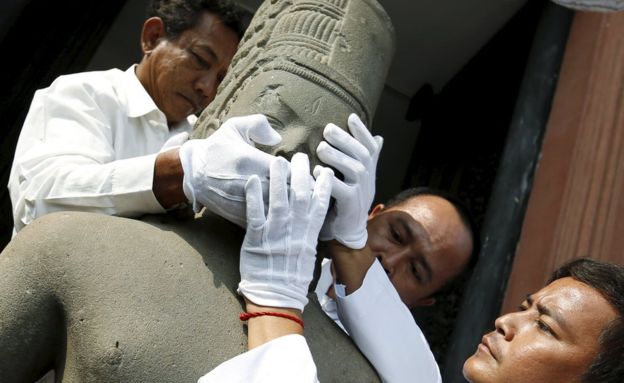
Pieces of sculpture, the same sculpture were captured all around side. And we had a wonderful diverse sculpture, which she is dancing , and daté. She arrived at the end of the 19th century sent by the king of Cambodia. And she came from the temple of Koca, which is from the 10th century, and the feet were cut. And we have a beautiful head in the collection. Then we realize you know exchanging with our colleagues, that the head we have belong to body they have. So we make a long time déposite to Cambodia, and the head put back on the body. And they discovery the base of the sculpture we have in our museum, they sent the base. And one of the great moment recently was we reinstalled the sculpture with it’s base, we change it dramatically.
雕塑的残件,同一件雕塑的各部分散落在各个地方。我们有非常精美、多样的雕塑作品,图案似在舞蹈。这件作品是19世纪末由柬埔寨国王赠送的。她来自于Koca寺庙,年代大约10世纪,脚部已经被切掉了。我们只拥有非常优美的头部。后来在与我们工作人员的交流当中我们意识到,我们拥有的头部属于他们拥有的那个身体的一部分。所以我们花了很长时间的去柬埔寨,把头部雕塑放回到身体上,同时他们在我们博物馆也发现了这座雕像的基座,我们把基座也送过去。最近最难忘的一刻就是,当我们把这座雕像和基座重新组合在一起,这样的改变是巨大的。
如何理解博物馆与大众的关系?
I think that from the very beginning of the creation of museum, of course the idea was preserving the objects. And then, the idea of what is museum changed a little bit, more or less it become a kind of school, but it is a school nominal for the artists. The idea especially with louvre for example, was to have a kind of laboratory of artistic experience. You came to the museum to get an experience and to preserve the pieces which were kept that. You have the museum.
我认为在一开始博物馆被创办的时候,当然目的是为了保存藏品。然后,对于博物馆的理解逐渐发生了变化,或多或少变成了一种学校,不过这座学校是给艺术家的。比如像卢浮宫,是艺术体验的实验室。所以你来到博物馆获得一种体验,收藏了在此的作品。你们拥有了这个博物馆。
But more and more, we have the feelings that museum is very strong in sharing with people, so the idea is broadening the knowledge, sharing with people. And it’s more and more important when you come to a museum which deal with Asian art, because the idea is really you know to introduce Asia, to introduce knowledge, and I would say pleasure about and appreciating about Asian art to a broad audience. So we are now very convincing since many years now. That of course we have to work lot with children, to prepare the audience of the future, and to try to work on the topics of the exhibition which are more accessible to the public especially for the French public, and we functioned very well.
但是慢慢地,我们越发意识到博物馆非常需要与公众分享,所以变成了知识的拓展,与大众分享。这变得越来越重要,当你走进一座亚洲艺术博物馆,介绍亚洲的知识,通过把亚洲艺术分享给更多的观众,我也会感到一种愉悦感。所以,经过了这么多年我们已经被充分地信任。当然,我们应该与孩子一起做大量工作,为未来的观众做准备;也要尝试着推出主题更贴近大众的展览,让更多的观众尤其是法国观众能看到,我们进行得还不错。
文章作者
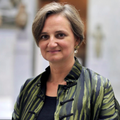

苏菲·马卡里乌Sophie Makariou
发表文章1篇 获得4个推荐 粉丝19人
法国吉美博物馆馆长
收录专栏
现在下载APP,注册有红包哦!
三联生活周刊官方APP,你想看的都在这里